If you're having trouble viewing this email, you can see it online.
Ecology Action Center at work

Donate ○  Membership ○  Volunteer ○ Events Calendar ○  RecycleBN.org ○ BNcommunityComposting.orgBNCARE.org
Tree-Corps.org ○ BNenergyBright.org ○ HHWmclean.org ○ mCLEANwater.org ○ YardSmart.org

Ecology Action News

The Pros and Cons of Fall Leaf Management


Ah, autumn — that magical time of year when pumpkin spice takes over every coffee shop, you start your 5th re-watch of Gilmore Girls (#TeamJess), and your yard transforms into a crunchy, colorful carpet of leaves. But before you grab that rake and declare war on nature’s confetti, let’s talk about your options and the pros and cons of each.

rory-pro-con-list.jpg

Option 1: Rake your leaves to the curb

Pros:

·         Your yard looks neat and ready for a magazine cover (or at least the HOA newsletter).

·         Free workout! Who needs a gym when you’ve got a rake and a yard full of leaves?

·         You’re making full use of those tax dollars that fund leaf pickup.


Cons:

·         Your plants and soil aren’t cheering—raking removes a natural blanket that protects roots and feeds the plants.

·         Raking to the street (instead of the curb) is not just frowned upon—it’s illegal and can cause street flooding when leaves clog storm drains.

·         Leaves in the street eventually become stormwater pollutants. As they decay, they deplete oxygen in waterways, suffocating fish and plants, and can contribute to algal blooms that affect water quality and can create unpleasant flavors in our water--yeech!


Option 2: Compost your leaves

Pros:

·         Turns yard waste into gardening gold—nutrient-rich fertilizer for free! Learn more at CompostBN.org!

·         Provides a great source of “browns” (carbon rich organics) for your compost bin to balance out all those “greens” (nitrogen rich organics like kitchen scraps). Create a pile of leaves to pull from all year long.

·         Another full-body workout—because who needs a row machine when you’ve got a rake?

·         Keeps your yard looking tidy and environmentally responsible.


Cons:

·         Composting isn’t a “set it and forget it”. It requires time, turning, and some sweat equity to keep things cooking. Regular aeration, adding materials, and a bit of trial-and-error are all part of the process.

·         While it’s great for soil health in the long run, it doesn’t give pollinators or other overwintering critters a cozy place to crash during the colder months.


Option 3: Mulch your leaves

Pros:

·         Allows your leaves to quickly break down over time into a natural fertilizer.

·         Recycles leaves right where they fall—less raking, more relaxing.

·         Keeps your yard looking tidy.

Cons

·         Doesn’t provide habitat for pollinators or overwintering critters—they’ll have to find another Airbnb.

·         If you’re using a gas mower, you’re burning fossil fuels increasing your carbon footprint.


Option 4: Leaf them be

Pros:

·         Leaves left on the lawn provide habitats for pollinators and overwintering critters.

·         Zero work involved—literally just chill and watch your yard thrive.

·         Adds nutrients back into the soil as they decompose—natures recycling!

·         Raking leaves onto garden beds and around trees, helps to creates a cozy blanket for plants and insects.


Cons:

·         Leaves piled too thick can smother grass instead of helping it—think of it like wearing a winter coat in July.

·         Some neighbors might not appreciate the “natural art installation.”

·         It takes a while to break down so benefits come slower.


In the end, there’s no one-size-fits-all approach to fall leaf management — and honestly, that’s part of the fun (or frustration, depending on how many trees you have). A mix of strategies can be the perfect solution for you and your yard; balancing neatness with nature, and leaving room for beauty, biodiversity, and a few stray leaves.

The Most Extremely Amazing Trees: Proving plants are pretty cool, actually.

Your Attention Please, for some Amazing Trees!

Do you have a favorite tree? Is there a species of flower you look forward to seeing every spring? If nothing comes to mind, you’re not alone. Approximately 80% of all biomass on earth is plant matter, and yet most humans tend to barely give plants a second thought. We consider them to be background scenery, rather than living breathing unique organisms. Most of us can name several endangered animal species, but a lot less of us know any endangered plants. This phenomenon is known as Plant Awareness Disparity (PAD) - the inability to notice plants in one's environment, recognize their importance or appreciate their unique biological features.1 

Knowing the basics of what plants are in your vicinity shouldn’t be a niche interest. We rely on plants for food, building materials, medicine, and most critically - oxygen. As the climate changes, it will be in our best interest for everyone to be able to notice when the plants around us are changing, thriving, or not surviving. Beyond that, plants are actually really cool! Since we just so happen to have an affinity for trees here at the EAC, we’re introducing this new series - The Most Extremely Amazing Trees! Make sure to let us know in the poll if you're impressed with this month's tree!

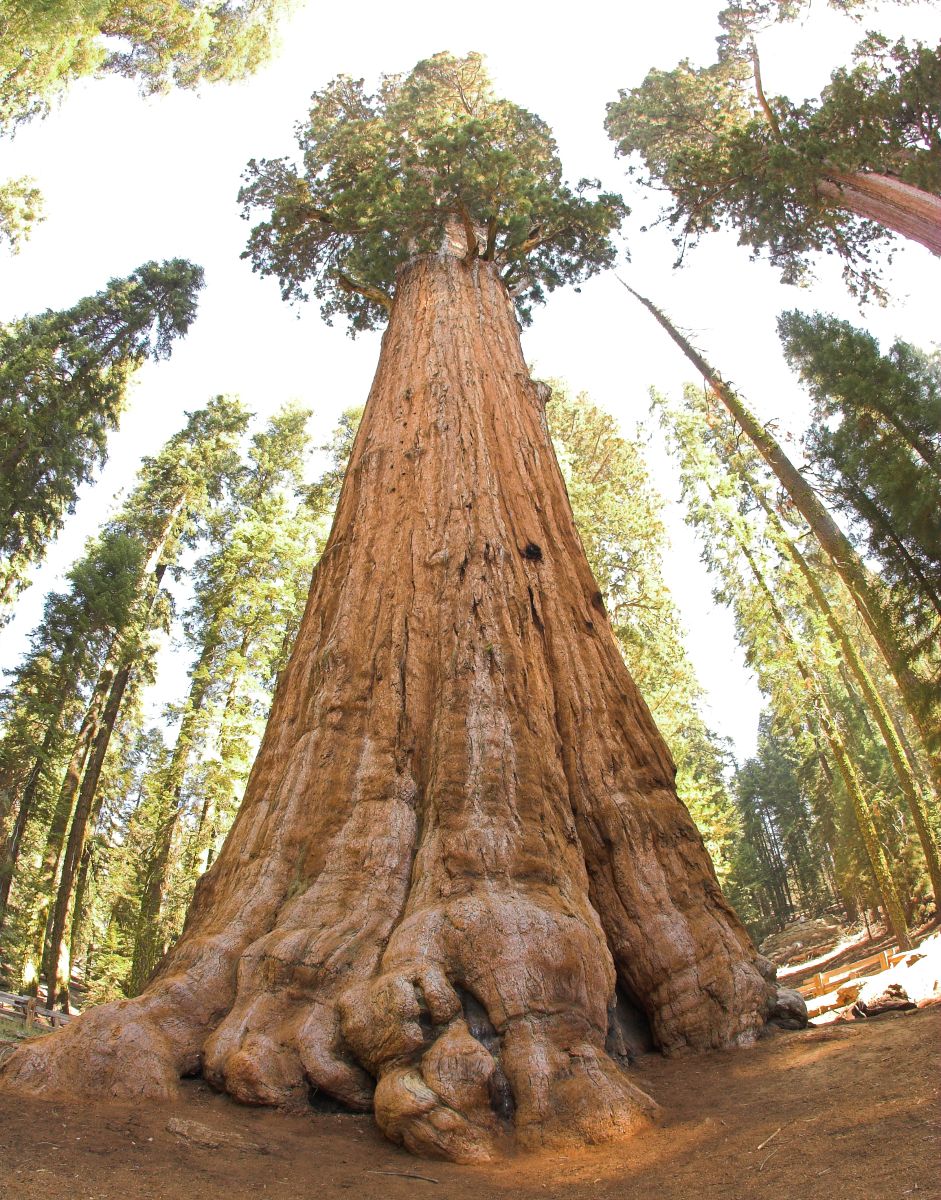
General Sherman tree looking up
biggest

NAME: General Sherman
SPECIES: Giant Sequoia Sequoadendron giantem
LOCATION: Sequoia National Park, California

General Sherman is the biggest living single stem tree on earth. At a whopping 56,000 cubic feet, General Sherman is the biggest tree by volume on the planet, and the undisputed king of the forest.2 This living giant is thought to be approximately 2,100 years old and weigh 2.7 million pounds!3

Giant sequoias are the largest species of trees in the world. They grow their largest in the mid-sierra zone where mild temperatures, deep winter snowpack, and historic fires create the perfect conditions.4 A typical giant sequoia can be 200 feet tall, but their volume is unmatched because of their huge trunks, that can be wider than a city street!

With a circumference of 102.6 feet at the base, it would take approximately 17 adults holding hands to encircle General Sherman. Now that’s what I call a tree hug! So gather up 16 of your friends for a road trip to Sequoia National Park, because unlike some others, General Sherman is allowed to be visited by the public!

READER POLL
What do you think of this month's Extremely Amazing Tree?


  1. Jose, Sarah, Chih-Hang Wu and Sophien Kamoun. “Overcoming plant blindness in science, education, and society” Plants People Planet, July 2019. https://nph.onlinelibrary.wiley.com/doi/full/10.1002/ppp3.51
  2. One Tree Planted. “The 9 Oldest, Tallest, and Biggest Trees in the World” OneTreePlanted, October 2024. https://onetreeplanted.org/blogs/stories/oldest-tallest-biggest-trees
  3. Sequoia & Kings Canyon National Parks “Exploring General Sherman Tree” 2025. https://www.visitsequoia.com/sequoia-national-park-attractions/general-sherman-tree/
  4. National Park Service. “The Largest Trees in the World” National Park Service U.S. Department of the Interior, November 2023. https://www.nps.gov/seki/learn/nature/largest-trees-in-world.htm

Help us identify public sites in need of trash pick up!

mclean up crew logo

Have you noticed any places around town that could use a little sprucing up? Our mCLEAN up Crew is always on the look out for “trashy” spots to beautify! Submit sites you find with as much detail as possible. We will do a site assessment and determine if we are able to add it to our list for an upcoming workday! All sites must be within McLean County, Illinois.

submit a trash pick up location for mclean up crew at ecologyactioncenter.org/mcleanup


2071-ad_banner.png

Paid Time off to Volunteer?

Most of us know what PTO (Paid Time Off) means in the workplace.  But what about Paid Volunteering Time Off?  Yes, some employers give their employees two or more hours off each month to engage in volunteer activities in their community.  The management folks in those companies adhere to a philosophy that it is important for their company to support the local community and doing volunteer work for local non-profits is a great way to do just that.

Here at the Ecology Action Center, we have many volunteer activities! Our volunteers walk Constitution Trail (and other areas of town) and pick up trash. We walk along Sugar Creek and remove invasive plants and we plant many, many trees in our county.  We collect corn cobs for composting at the Corn Circus Festival and manage recycling at the McLean County Fair. Our volunteers do stormwater drain stenciling and circulate reminders about the importance of keeping out stormwater runoff as clean as possible. We sometimes need volunteers to help us prepare handouts for certain events.  And our list of volunteer opportunities goes on and on!

We want to give a shout-out to the local businesses that have this paid volunteer time off.  These are companies/organizations whose employees have volunteered for us, using this paid time off for volunteering:

  • Busey Bank
  • Constellation Energy (Clinton Nuclear Power Plant)
  • Country Financial
  • Heartland Bank
  • Heartland Community College
  • Illinois State University
  • Illinois Wesleyan University
  • Rivian
  • State Farm Insurance

If you know of other businesses with this benefit, we’d love to hear from you! Contact Deb Pitcher using our Contact Us form and select "2071 Endowment Fund".

Smash, Don't Trash: Compost Your Pumpkins!

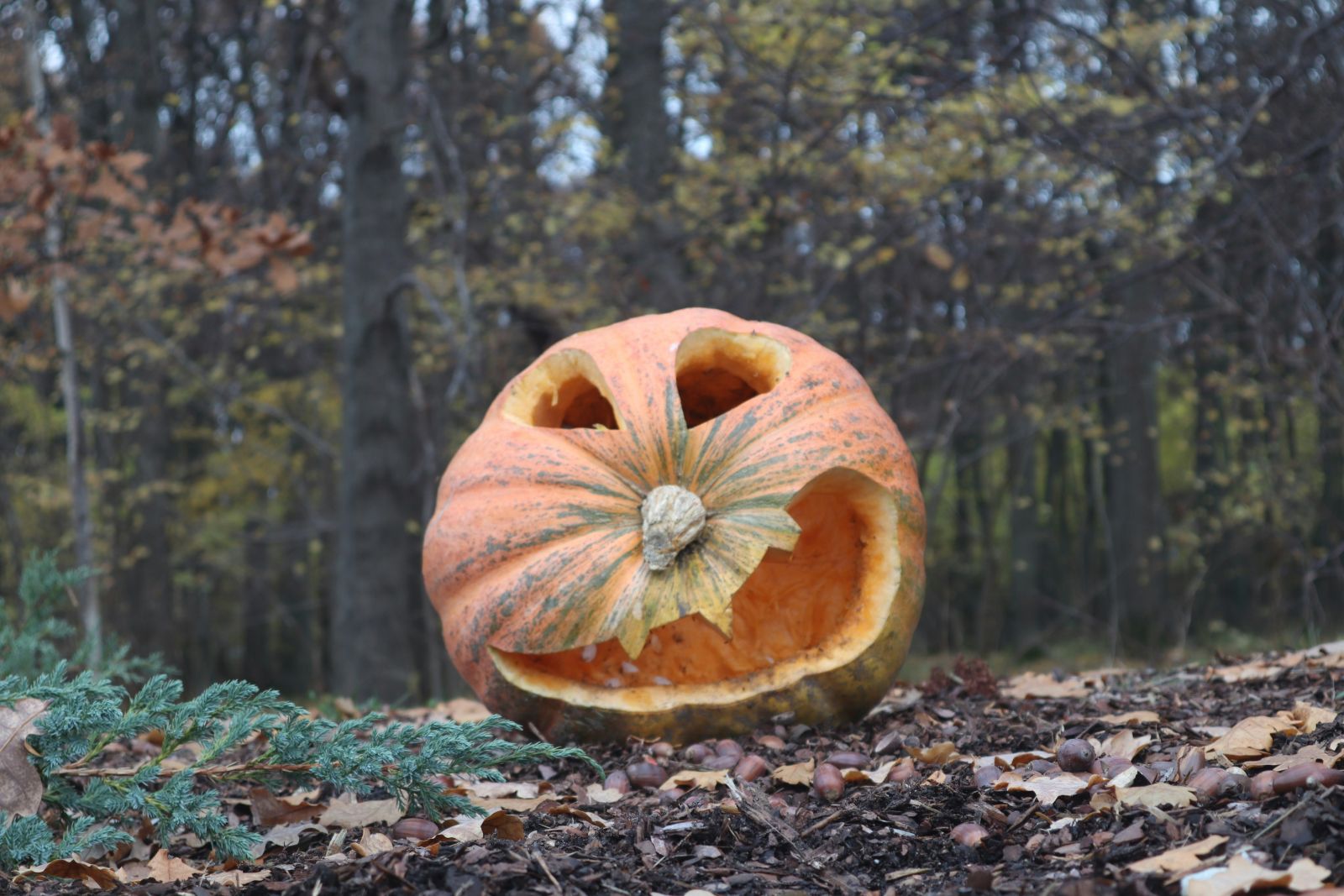
composting pumpkin

As Halloween draws nearer, people across the U.S. flock to big box stores to purchase their holiday decorations. For many, these decorations are a quick and easy way to celebrate this spooky holiday but then they are quickly forgotten about, often ending up in landfills. Many of these decorations are made from oil-based plastics and are produced at a large scale. If you are willing to forgo plastic decorations entirely, there is nothing wrong with a good old fashioned pumpkin. Pumpkins are easily compostable, guaranteeing a fun and environmentally friendly carving experience with family and friends! Plus, you can even save the seeds and throw them in the oven for a light and tasty snack.1

After the 31st of October, take a trip out to Rader Family Farms and participate in the annual Pumpkin Smash event on November 8, from 10am-2pm to ensure that your pumpkins do not end up in a landfill. The USDA estimates that of the 1.3 billion pumpkins bought by Americans each year, over 1 billion pounds end up rotting away in landfills.2 Decaying pumpkins in landfills produce methane, a greenhouse gas worse than carbon dioxide, which is a large contributor to climate change.3 This happens because landfills are meant to break down inorganic material with low oxygen levels and not designed for organic decomposition.4

If you aren’t in a smashing mood, consider dropping off your pumpkins to Illinois State University’s Office of Sustainability. For the entire month of November, you can drop off your pumpkins outside the office from 8am-6pm. When dropping off pumpkins at either event, remember to remove any paint, stickers, glitter, or any non-organic material as these contaminate the composting stream.

Want to reap the benefits of composting? Make a backyard compost bin! Crafting a compost system in your backyard is easy. All you need to do is locate an area 2 feet away from any structure, and then either install a bin or begin making a pile of sticks and yard trimmings. From there, start adding green items (nitrogen rich) like vegetable and fruit scraps, grass clippings and brown items (carbon rich) like egg shells, cardboard, dry leaves. Make sure to mix every now and then to ensure that the organic material in your compost is getting the oxygen it needs to properly break down. You can buy assembled compost bins at the EAC website and find more composting information at CompostBN.org.

One small note for Community Compost Members, please do not compost your pumpkins in the community kiosks. This takes up lots of space in the bins and makes it difficult for others to drop off their compostable material. Instead dispose of pumpkins using one of the options above.


  1. Robinson, Celeste , and Karlie Conzachi. 2024. “Sustainable Halloween Ideas.” Environmental Center. October 6, 2024. http://www.colorado.edu/ecenter/2024/10/14/sustainable-halloween-ideas.
  2. “Over 80% of Halloween Pumpkins Are Thrown Away Each Year. Here’s What You Can Do Instead | Boreal Community Media.” 2024. Boreal.org. 2024. https://www.boreal.org/2024/11/01/470980/over-80-of-halloween-pumpkins-are-thrown-away-each-year-heres-what-you-can-do-instead.
  3. “Pumpkin Smash.” 2019. Illinois Extension. 2019. https://extension.illinois.edu/environment/pumpkin-smash.
  4. Enriquez, Teressa. 2023. “Landfill Pumpkins Cause Methane Emissions. Smash and Compost Instead.” AZ Luminaria. October 30, 2023. https://azluminaria.org/2023/10/30/landfill-pumpkins-cause-methane-emissions-smash-and-compost-instead/.
This email was sent to {{Recipient Email}}. Click here to unsubscribe.